ASSESSMENT
The reason to assess (TRUJILLO)
Why do you assess students?
• to know if our teacing is effective and take necessary adjustments
• to detect if the teaching objectives have been reached
• to detect possible difficulties our students might have
• to be able to give our students and families a mark
• to determine if the teaching is adequate and if it is effective
•to comply with the legislation...
Learning
Learning through projects implies a learning process which leads, among other things, to the creation of a fixed final product.
A PBL allows you to obtain evidence of the development of the project and its result.
The teacher and the students have a great variety of ways to assess (to give feedback!) the students' learning.
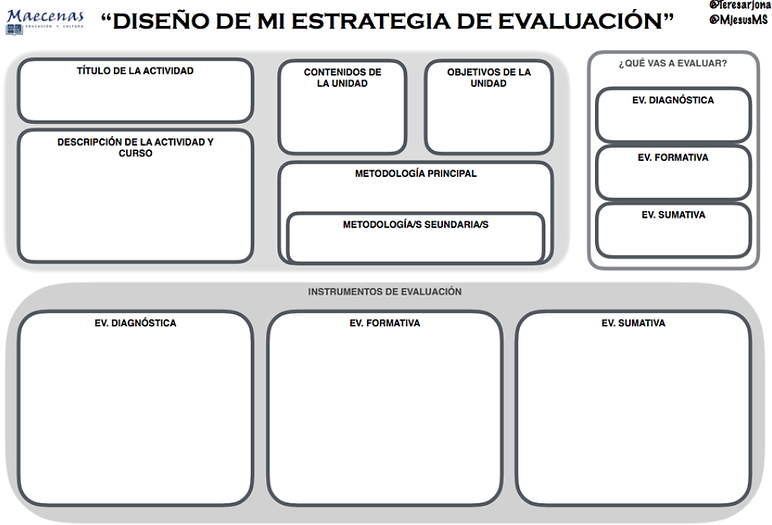
These ways can be simplified into the following categories:
-
Inicial assessment (diagnostic)
-
Self-assessment
-
Formative assessment ( This type of assessment does not count for the student's final mark, it is only a feedback for future improvement)
-
Summative assessment


To assess the process we can use, amongst others, learning diaries, observation sheets, surveys or rubrics.
This assessment is of foremost importance in a PBL as the learning process is at least as important as the final result, if not even more!
In order to assess the final product we can use for instance checklists, rubrics or presentations
Varieties of collecting students' feedback:
-
Learning Diary (Dossiers)
-
Portfolios
-
Rubrics ( in terms of a transparency and reflection tool)
-
checklists
-
Dartboard assessment
-
self-assessment, peer-assessment
-
conversations with students (!!)
-
Surveys / Google Forms
-
etc.
Do not only use one way of assessing a student. It's the mix!
The (trans) formative assessment:
The dynamic assessment of a PBL

Assessment tools


Learning diaries /portfolios
Learning diaries /portfolios


Rubrics
Checklists / conceptual maps

Peer assessment

Forms / surveys


Gamification